
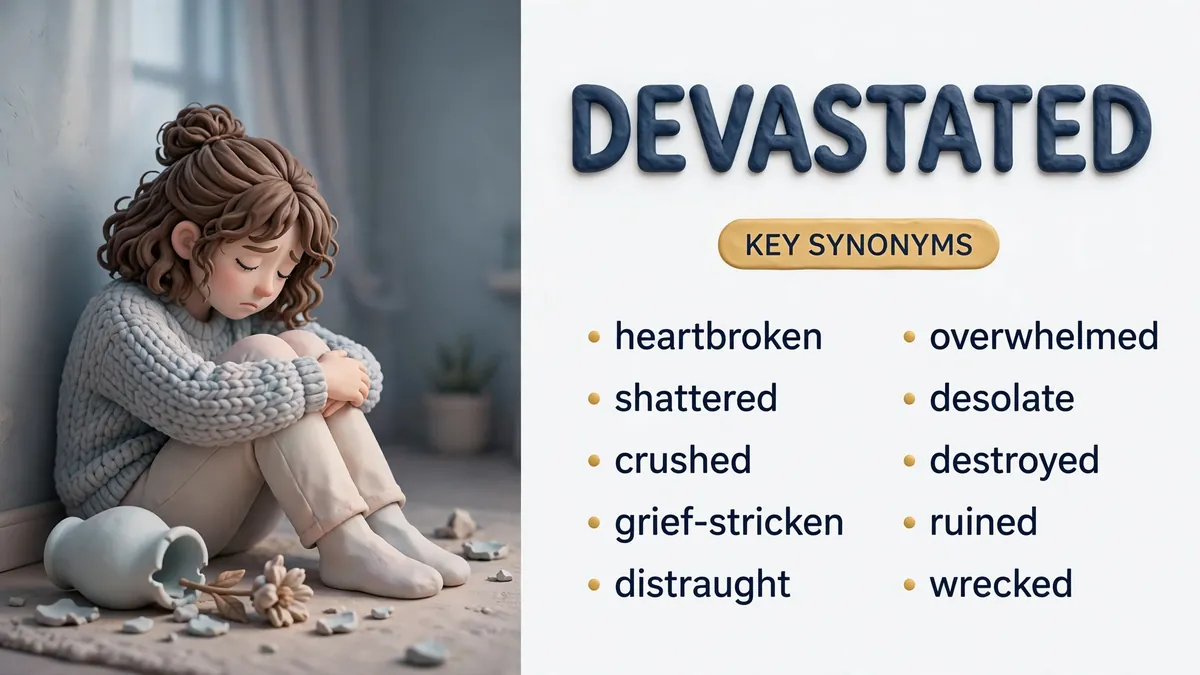
What word fits when a loss hits so hard that a person can barely speak? In short devastated means overwhelmed with grief or shock or destroyed beyond repair and these devastated synonyms fit both a broken heart and a ruined town.
Devastated Synonyms at a Glance: Top 10
| # | Synonym | Meaning Difference |
|---|---|---|
| 1 | Heartbroken | Overwhelmed with grief after a loss |
| 2 | Shattered | Broken inside by shock or grief |
| 3 | Crushed | Weighed down by bad news |
| 4 | Grief-stricken | Struck hard by grief |
| 5 | Distraught | Wild with worry and grief |
| 6 | Overwhelmed | Too much feeling to cope |
| 7 | Desolate | Empty and alone after a loss |
| 8 | Destroyed | Broken beyond repair |
| 9 | Ruined | Spoiled so it cannot work or stand |
| 10 | Wrecked | Smashed and left in pieces |
Quick Facts About Devastated Synonyms
Part of speech: adjective. The verb is devastate, and the noun is devastation.
Core meaning: overwhelmed with grief or shock, or destroyed beyond repair.
Two main senses: (1) a person overwhelmed by grief or shock, as in a devastated mother; (2) a place or thing destroyed, as in a devastated village.
Register: neutral to formal. In fact, devastated fits news stories, essays, and everyday talk.
Common mistake: using devastated for a small letdown. A late bus disappoints a person, but it does not devastate a person.
The Closest Devastated Synonym: Heartbroken
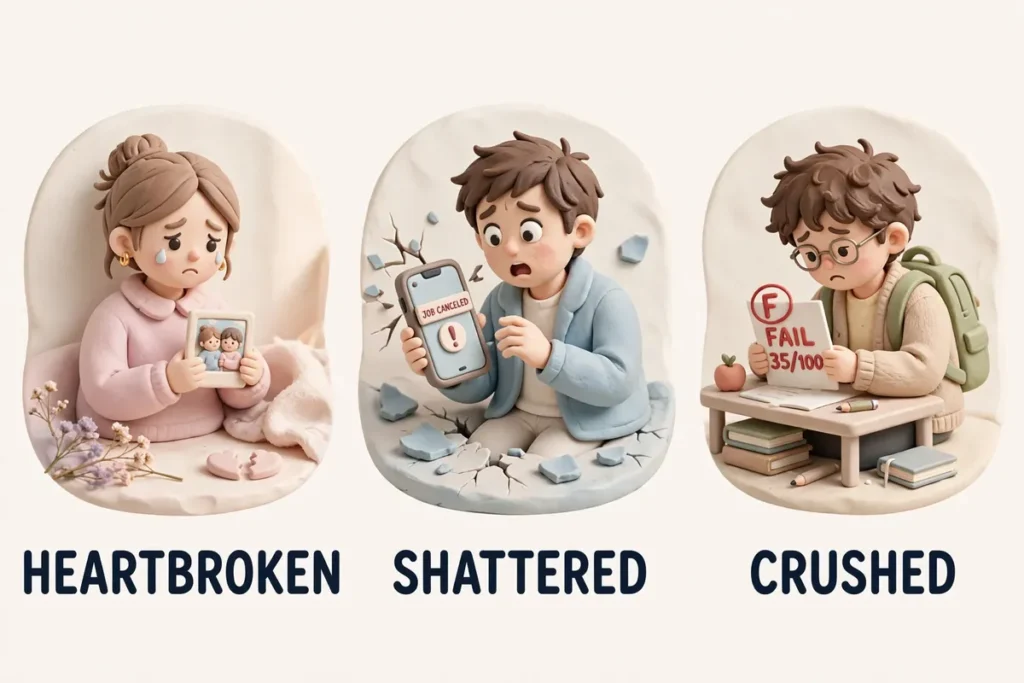
Heartbroken is the closest of these devastated synonyms, because it covers the same ground most fully: a person overwhelmed with grief after a loss. “She felt devastated by the news” becomes “She felt heartbroken by the news.” “The devastated fans left the stadium in silence” becomes “The heartbroken fans left the stadium in silence.”
Heartbroken also wins on warmth. It sounds human and tender, therefore it fits family loss, broken love, and sad news. But devastated stays wider and stronger. Use heartbroken for grief in a person, and save devastated for grief that shocks, or for a place in ruins.
Where Devastated Synonyms Come From
According to Etymonline, devastate dates to the 1630s and meant “lay waste, ravage, make desolate.” In fact, it likely came as a back-formation from devastation. Similarly, an earlier verb form, devast, dates to the 1530s and came from French devaster, which came from Latin devastare.
Specifically, Latin devastare means “lay waste completely.” It joins de-, “completely,” with vastare, “lay waste.” Vastare comes from vastus, “empty, desolate.” The figurative use, a person laid waste by grief, dates to 1856. Overall, the history explains the word behind these devastated synonyms: it began as a ruined field and grew into a ruined heart. Read the full entry at Etymonline.
Can You Swap Devastated Synonyms Freely?
In short: only inside the same meaning group.
- “She felt devastated after the loss.” (overwhelmed with grief)
- “She felt heartbroken after the loss.” (overwhelmed with grief)
- “She felt destroyed after the loss.” (destroyed fits a thing in ruins, not a feeling; say heartbroken or shattered)
- “The storm left the town devastated.” (destroyed beyond repair)
- “The storm left the town ruined.” (destroyed beyond repair)
Before you substitute one of these devastated synonyms, ask what broke: a heart, or a place.
Devastated Synonyms in Detail
Group 1: A Heart in Pieces
1. Heartbroken
- Meaning: Overwhelmed with grief after a loss.
- Difference: Indeed, heartbroken adds tenderness to grief. A devastated person feels shock as well, but a heartbroken person feels love lost.
- Best Used For: Family loss, broken love, and sad news about people.
- Formality: Neutral · CEFR: B2 · Frequency: Very common
- Example (Family): “The heartbroken mother held her son’s photo all night.”
- Example (Daily): “He felt heartbroken when his best friend moved away.”
- When NOT to Use It: For a ruined building or town, use destroyed instead.
2. Shattered
- Meaning: Broken inside by shock or grief.
- Difference: In fact, shattered stresses a sudden break. A heartbroken person grieves slowly, but a shattered person falls apart at once.
- Best Used For: Sudden bad news, shock, and strong emotion in stories.
- Formality: Neutral · CEFR: B2 · Frequency: Common
- Example (Daily): “She felt shattered when she heard the test result.”
- Example (Story): “The shattered captain stared at the empty harbour.”
- When NOT to Use It: For mild sadness, use sad instead.
3. Crushed
- Meaning: Weighed down by bad news or failure.
- Difference: Indeed, crushed stresses pressure from above. A shattered person breaks, but a crushed person sinks under the weight of the news.
- Best Used For: Defeat, rejection, and hopes that fail.
- Formality: Neutral · CEFR: B1 · Frequency: Very common
- Example (Work): “He felt crushed when the firm turned down his plan.”
- Example (School): “The crushed student read the fail mark twice.”
- When NOT to Use It: For a destroyed town, use ruined instead.
4. Grief-stricken
- Meaning: Struck hard by grief.
- Difference: In fact, grief-stricken sounds formal and grave. A heartbroken friend grieves in plain words, but a grief-stricken crowd grieves in a news report.
- Best Used For: News stories, formal writing, and public loss.
- Formality: Formal · CEFR: C1 · Frequency: Uncommon
- Example (News): “Grief-stricken parents waited outside the school gate.”
- Example (Story): “The grief-stricken widow wore black for a year.”
- When NOT to Use It: For casual talk with friends, use heartbroken instead.
5. Distraught
- Meaning: Wild with worry and grief.
- Difference: Specifically, distraught adds panic to grief. A heartbroken person sits in quiet tears, but a distraught person paces, cries out, and cannot think straight.
- Best Used For: Emergencies, missing people, and scenes of panic.
- Formality: Neutral to formal · CEFR: C1 · Frequency: Common
- Example (Daily): “The distraught father ran through the streets and called her name.”
- Example (News): “Distraught fans begged the club for news of the star.”
- When NOT to Use It: For quiet, steady grief, use heartbroken instead.
6. Overwhelmed
- Meaning: Too much feeling to cope.
- Difference: Indeed, overwhelmed stays broad. A devastated person faces grief, but an overwhelmed person can face grief, work, or joy, so the cause must stay clear in the sentence.
- Best Used For: Strong feeling of any kind, in work and daily life.
- Formality: Neutral · CEFR: B2 · Frequency: Very common
- Example (Work): “She felt overwhelmed by the kind messages after the funeral.”
- Example (Daily): “He felt overwhelmed and sat down to breathe.”
- When NOT to Use It: For a ruined place, use destroyed instead.
7. Desolate
- Meaning: Empty and alone after a loss.
- Difference: In fact, desolate stresses emptiness. A heartbroken person feels pain, but a desolate person feels a hollow space where the loved one stood.
- Best Used For: Loneliness after loss, and empty places in stories.
- Formality: Formal · CEFR: C1 · Frequency: Uncommon
- Example (Story): “She felt desolate in the house after her mother died.”
- Example (Daily): “The desolate beach matched his mood that day.”
- When NOT to Use It: For fresh shock, use shattered instead.
8. Stunned
- Meaning: Shocked so hard that words fail.
- Difference: Specifically, stunned stresses shock, not grief. A heartbroken person weeps, but a stunned person stands still and says nothing.
- Best Used For: Sudden news, accidents, and moments of disbelief.
- Formality: Neutral · CEFR: B2 · Frequency: Common
- Example (Daily): “She sat stunned and stared at the phone.”
- Example (News): “Stunned fans watched the star leave the field.”
- When NOT to Use It: For long grief after a loss, use heartbroken instead.
Group 2: A Place or Thing in Ruins
9. Destroyed
- Meaning: Broken beyond repair.
- Difference: Indeed, destroyed is the plain word for ruin. A devastated town lies in waste, but a destroyed town names the same ruin in the simplest terms.
- Best Used For: News reports, history, and plain talk about ruin.
- Formality: Neutral · CEFR: B1 · Frequency: Very common
- Example (News): “Fire destroyed the old market in one night.”
- Example (Daily): “The flood destroyed the bridge and cut off the village.”
- When NOT to Use It: For a sad person, use heartbroken instead.
10. Ruined
- Meaning: Spoiled so it cannot work or stand.
- Difference: In fact, ruined stresses loss of use. A destroyed house falls down, but a ruined plan fails, and a ruined crop feeds no one.
- Best Used For: Plans, crops, buildings, and reputations.
- Formality: Neutral · CEFR: B1 · Frequency: Very common
- Example (Work): “Rain ruined the harvest and broke the farmers.”
- Example (Daily): “One leak ruined the new carpet in the hall.”
- When NOT to Use It: For a grieving person, use shattered instead.
11. Wrecked
- Meaning: Smashed and left in pieces.
- Difference: Specifically, wrecked sounds violent and sudden. A ruined town decays slowly, but a wrecked car or ship breaks in one hard crash.
- Best Used For: Vehicles, ships, and things smashed by force.
- Formality: Neutral · CEFR: B2 · Frequency: Common
- Example (News): “The storm wrecked three boats in the harbour.”
- Example (Daily): “He wrecked his bike on the wet road.”
- When NOT to Use It: For quiet grief, use heartbroken instead.
12. Ravaged
- Meaning: Laid waste by war, fire, or disease.
- Difference: Indeed, ravaged stresses a cruel force at work. A ruined field fails, but a ravaged land suffers attack after attack.
- Best Used For: War, fire, flood, and disease in serious writing.
- Formality: Formal · CEFR: C1 · Frequency: Uncommon
- Example (News): “War ravaged the valley for ten long years.”
- Example (Story): “Fever ravaged the town and left few homes untouched.”
- When NOT to Use It: For everyday talk, use ruined instead.
13. Demolished
- Meaning: Pulled down on purpose.
- Difference: In fact, demolished adds human intent. A wrecked house falls by chance, but workers demolish a house with a plan.
- Best Used For: Buildings pulled down, and plans torn apart in debate.
- Formality: Neutral · CEFR: B2 · Frequency: Common
- Example (Daily): “Workers demolished the old school in a week.”
- Example (Work): “Her speech demolished every weak point in his case.”
- When NOT to Use It: For a person in grief, use crushed instead.
14. Flattened
- Meaning: Knocked flat to the ground.
- Difference: Specifically, flattened paints a clear picture. A destroyed town may stand in part, but a flattened town lies level with the earth.
- Best Used For: Towns, houses, and crops after a storm or blast.
- Formality: Neutral · CEFR: B1 · Frequency: Common
- Example (News): “The blast flattened whole streets in seconds.”
- Example (Daily): “Hail flattened the wheat before harvest.”
- When NOT to Use It: For a sad feeling, use heartbroken instead.
15. Gutted
- Meaning: Emptied inside, or deeply upset.
- Difference: Indeed, gutted works in two ways. A gutted house keeps its walls but loses its rooms, and a gutted person in British talk loses all hope for a moment.
- Best Used For: Burned buildings, and informal British talk about loss.
- Formality: Informal · CEFR: C1 · Frequency: Common
- Example (News): “Fire gutted the old theatre last night.”
- Example (Daily): “I felt gutted when our team lost the final.”
- When NOT to Use It: For formal writing, use devastated instead.
Best Devastated Synonyms by Context
Overall, these devastated synonyms fit real scenes.
At work. For example, a manager writes to a team after a firm fails. Crushed fits best, because it names defeat at work. Similarly, overwhelmed works when the note stresses too much feeling to cope.
In a story. For example, a writer tells the life of a mother after a loss. Heartbroken leads, because she shows deep grief with love. Shattered follows for the moment the news lands, but desolate fits the empty house that comes after.
In a news report. Meanwhile, a reporter covers a storm town. Destroyed fits best, because it stays plain and clear. Ruined follows for crops and plans, while ravaged suits war or fire with a cruel force behind it. Our guide to empathy synonyms covers feeling the pain of others.
In everyday talk. For example, a friend hears sad news on the phone. Heartbroken fits best, because it sounds warm and human. Crushed works for a failed hope, and gutted fits a British friend who lost a match.
Which of These Devastated Synonyms Should I Choose?
Overall, each of these devastated synonyms fits one sense.
| Situation | Best pick | Why it wins |
|---|---|---|
| Grief after a loss | Heartbroken | The closest word |
| Sudden shock | Shattered | The sudden break |
| Defeat or rejection | Crushed | The weight |
| Formal public loss | Grief-stricken | The grave tone |
| Panic and grief | Distraught | The wild worry |
| Too much feeling | Overwhelmed | The broad sense |
| Emptiness after loss | Desolate | The hollow space |
| Shock with no words | Stunned | The disbelief |
| Plain ruin | Destroyed | The simplest word |
| A failed plan or crop | Ruined | The lost use |
| A crash or smash | Wrecked | The violent break |
| War or fire | Ravaged | The cruel force |
| Pulled down on purpose | Demolished | The intent |
| Knocked flat | Flattened | The clear picture |
| Informal British loss | Gutted | The local colour |
Words Commonly Confused With Devastated Synonyms
Devastated versus sad. In fact, sad means unhappy in a plain way. Devastated means overwhelmed with grief or shock, so it stands far above sad. A sad fan sighs at a loss, but a devastated fan weeps and cannot speak. Our guide to unhappy synonyms covers plain low spirits. Use sad for small lows, and devastated for grief that shakes a person.
Devastated versus disappointed. In contrast, disappointed means a hope failed. Devastated means grief or ruin struck hard. A disappointed student sighs at a low mark, while a devastated student weeps when a dream dies. Disappointment fades in days, but devastation takes far longer to heal.
Devastated versus bereaved. In contrast, bereaved means a person lost someone to death. Devastated covers any great loss, such as a home, a job, or a loved one. A bereaved widow grieves a death, but a devastated farmer grieves a ruined crop. Use bereaved only for death, and devastated for wider loss.
Devastated versus shocked. In contrast, shocked means surprised by sudden news. Devastated means grief joined the shock. A shocked crowd gasps at a score, but a devastated crowd weeps at a loss. Shock can pass in minutes, while devastation stays for weeks.
Devastated versus destroyed. In short, destroyed describes a thing in ruins. Devastated can describe a thing, but it also describes a person in grief. A destroyed bridge lies in the river, but a devastated mother lies awake in tears. Use destroyed for things, and devastated for people or places.
Collocations and Idioms With Devastated Synonyms
Indeed, these devastated synonyms appear in fixed phrases that fluent speakers actually use.
- devastated by the news: as in “She felt devastated by the news.”
- devastated by the loss: as in “He felt devastated by the loss of his brother.”
- utterly devastated: as in “The family felt utterly devastated after the fire.”
- left devastated: as in “The defeat left the whole team devastated.”
- heartbroken and devastated: as in “Fans felt heartbroken and devastated at the news.”
- devastated area: as in “Aid reached the devastated area in days.”
- devastated by grief: as in “She sat devastated by grief and said nothing.”
- completely devastated: as in “The town stood completely devastated after the storm.”
Devastated Opposites by Meaning
The right opposite follows the sense, therefore each meaning gets its own table.
Opposites of devastated as grief:
| Opposite | Meaning |
|---|---|
| Overjoyed | Full of great joy |
| Elated | Raised high by good news |
| Thrilled | Excited and full of delight |
| Relieved | Free from worry at last |
| Content | Quietly happy with life |
Opposites of devastated as ruin:
| Opposite | Meaning |
|---|---|
| Intact | Whole and unharmed |
| Unharmed | Safe with no damage |
| Thriving | Growing strong and well |
| Flourishing | Doing well in every way |
| Rebuilt | Made whole again after ruin |
Overall, overjoyed is the plain opposite for a person in grief. Intact suits a town that escaped harm, but rebuilt suits a place that rose again after ruin.
American vs British English
Overall, devastated keeps the same spelling and use in American and British English. Indeed, heartbroken, shattered, and ruined never change across the Atlantic. But one small difference sits nearby: Americans write “traumatized” where Britons write “traumatised.”
This article also uses American spelling throughout, and our guide to strength synonyms covers the words for standing firm after hard times.
Practice Exercises With Devastated Synonyms
First, test these devastated synonyms in the exercises below.
Exercise 1: Fill in the blank. Choose the best word from the list: heartbroken, shattered, crushed, distraught, ruined, destroyed.
- “Fill the gap: the _____ mother held her son’s photo all night.”
- “Her most _____ moment came when she heard the bad news.”
- “In class, the _____ student read the fail mark twice.”
- “The _____ father ran through the streets and called her name.”
- “Rain _____ the harvest and broke the farmers.”
- “Fire _____ the old market in one night.”
Exercise 2: Rewrite each sentence with a better synonym from this article.
- “A sad nurse helped the old man every day.”
- “One bad storm broke the town in seconds.”
- “A sad mother wore black for a year.”
- “He felt bad when our team lost the final.”
Answer key
- Exercise 1: (1) heartbroken: grief after a loss; (2) shattered: a sudden break; (3) crushed: defeat at school; (4) distraught: panic and grief; (5) ruined: a failed crop; (6) destroyed: plain ruin.
- Exercise 2: (1) “The heartbroken nurse helped the old man every day”: heartbroken fits grief with love; (2) “The blast flattened whole streets in seconds”: flattened fits knocked flat; (3) “The grief-stricken widow wore black for a year”: grief-stricken fits formal public loss; (4) “I felt gutted when our team lost the final”: gutted fits informal British loss.
Frequently Asked Questions
What is the best devastated synonym?
Heartbroken is the best of these devastated synonyms, because it covers the same ground: a person overwhelmed with grief after a loss. Shattered also fits sudden shock, destroyed fits a ruined place, and crushed fits defeat, so the best word follows the scene.
What is the difference between devastated and heartbroken?
Devastated means overwhelmed with grief or shock, or destroyed beyond repair, therefore it fits a person and a place. Heartbroken means grief after a loss, therefore it fits a person only. A devastated town lies in ruins, while a heartbroken mother weeps for her child.
Can devastated describe a thing?
Yes, and writers also use it that way often. For example, a devastated town lies in ruins after a storm, a devastated forest burns to ash, and a devastated plan fails past repair. Indeed, the sense stays the same: ruin struck hard and left little behind.
What is the opposite of devastated?
Overall, it depends on the sense. For a person in grief, the opposite is overjoyed, as in a fan who cheers a late win. Similarly, for a place in ruins, use intact, and for a place that rose again, use rebuilt. Overjoyed is the safe plain opposite when grief stands out.
Is devastated formal or informal?
Overall, devastated is neutral to formal. Indeed, it fits news stories, essays, stories, and everyday talk with ease. In plain everyday talk, heartbroken often sounds more natural, while grief-stricken fits a serious report. Use devastated when the setting asks for strength and gravity.
Can I use devastated in everyday speech?
Yes, and it sounds natural in daily talk. Indeed, devastated fits a loss, a defeat, or a ruined plan that truly hurts. For a small letdown, though, it sounds too strong, since a late bus disappoints a person but never devastates a person. Therefore, save it for real grief.
Conclusion: Picking the Right Devastated Synonyms
Overall, a word earns its place among the devastated synonyms when it names real grief or real ruin. Heartbroken adds love to grief, shattered adds a sudden break, and destroyed adds plain ruin, but each starts from the same root: something whole that broke apart.
In short, pick one of these devastated synonyms that matches the scene. Finally, use heartbroken for grief in a person, shattered for sudden shock, and destroyed for a place in ruins. The right word tells your reader not just that something broke, but how it broke.

About Sajjad Ahmed
Sajjad Ahmed is the author behind Guest Paster, where he writes about English vocabulary, synonyms, word meanings, and practical word usage.
His content is designed to help readers understand the differences between similar words, discover suitable alternatives, and use English vocabulary more effectively in everyday writing and communication.
Before publishing, Sajjad focuses on presenting word choices in a clear and easy-to-understand format, with relevant meanings, context, and examples where helpful.
Through Guest Paster, his goal is to make vocabulary learning simpler and provide useful language resources for students, writers, English learners, and anyone looking to expand their vocabulary.
Areas of Focus: English Vocabulary • Synonyms • Word Meanings • Word Usage • Language Learning
Author: Sajjad Ahmed
Website: Guest Paster