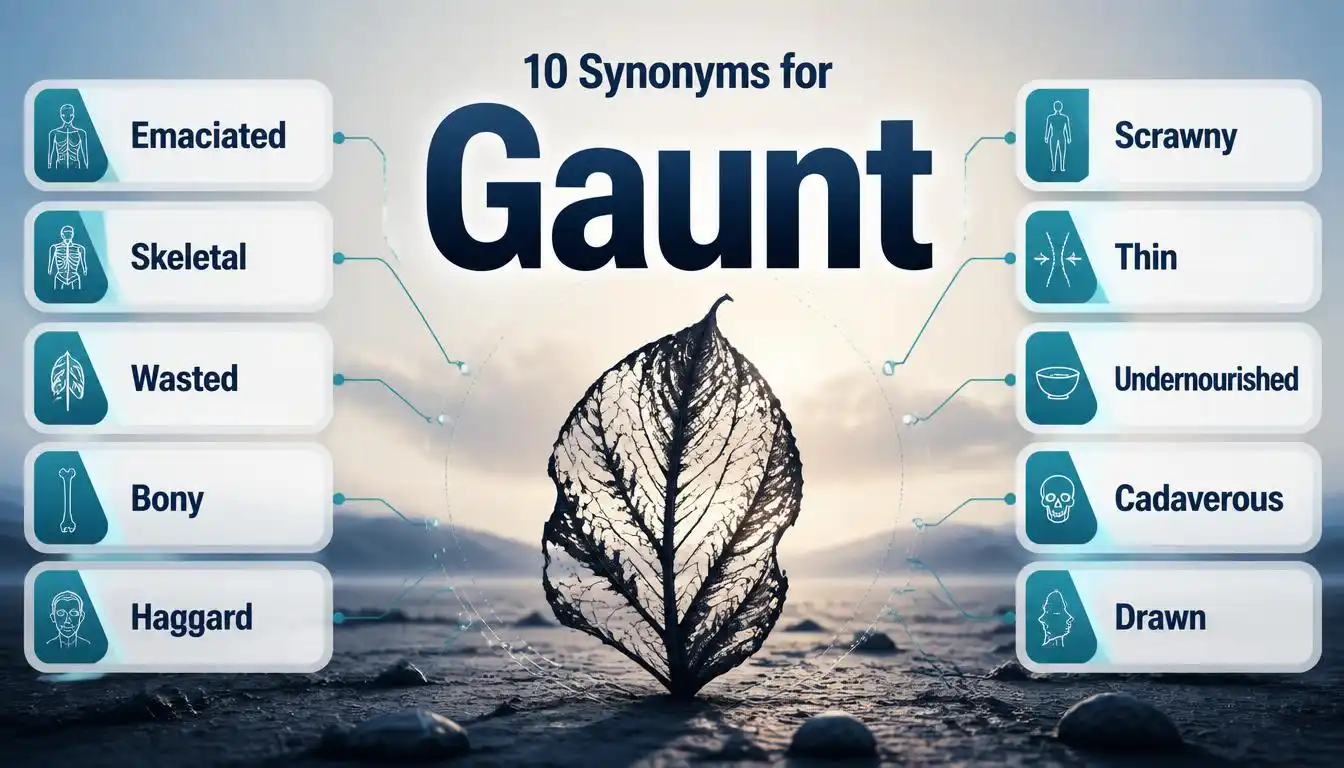
The best synonyms for gaunt are emaciated skeletal wasted bony and haggard. Gaunt usually means extremely thin and angular, often suggesting illness, hunger, worry or hardship. It can also describe a place or building that looks bare, bleak or forbidding.
The best synonym depends on context and tone. For example thin is neutral while emaciated suggests severe weight loss. In a sentence: After weeks of illness the character was described as gaunt and tired.
Best Synonyms for Gaunt and Their Meanings
| Synonym | Simple Meaning |
| Emaciated | Extremely thin usually from illness or lack of food |
| Skeletal | So thin that the bones appear very noticeable |
| Wasted | Made very thin and weak by illness or hardship |
| Bony | Having very noticeable bones |
| Haggard | Looking tired worn and often thin |
| Scrawny | Unattractively or noticeably thin |
| Thin | Having little body fat or flesh |
| Undernourished | Not receiving enough nutrition |
| Cadaverous | Extremely thin and pale |
| Drawn | Looking thin and tired especially in the face |
These alternatives reflect the main physical sense of gaunt which commonly suggests marked or excessive thinness rather than ordinary slimness.
Quick Facts About Gaunt
Word: Gaunt
Part of Speech: Adjective
Simple Meaning: Extremely thin and angular; sometimes bare or bleak in appearance
Pronunciation: /ɡɔnt/; also /ɡɑnt/ in some American speech
Syllables: 1
Origin: Middle English gaunt/gawnte; its earlier origin is uncertain.
Formality: Neutral; sometimes literary
Common Uses: Everyday description professional writing creative writing literary description
Example Sentence: The traveler looked gaunt after a long period of illness.
Gaunt Meaning and Usage
The most common gaunt meaning is very thin with an angular or bony appearance. The word often suggests that thinness is connected with illness, hunger, worry, age, exhaustion or another difficult experience. Oxford’s American dictionary for example describes gaunt as very thin usually because of illness, insufficient food or worry.
This makes gaunt stronger than the ordinary word thin. A naturally thin person is not automatically gaunt. Gaunt normally creates an image of a face or body that appears noticeably hollow, bony or worn.
Sense 1: Extremely Thin or Worn-Looking
This is the main modern meaning.
Example:
His face looked gaunt after the long illness.
The emotional tone is usually negative or serious. Because of that the word should be used carefully when describing a real person’s appearance. In fiction journalism or descriptive writing it can communicate hardship very efficiently.
Sense 2: Bare Bleak or Forbidding
Gaunt can also describe a building landscape ruin or similar object that appears stark, empty, severe or unattractive. Merriam-Webster gives the additional sense “barren” or “desolate” while Oxford notes its use for plain unattractive buildings without decoration.
Example:
The gaunt ruins stood above the empty valley.
This sense is more literary and descriptive than the physical-appearance sense.
Detailed Analysis of Synonyms for Gaunt
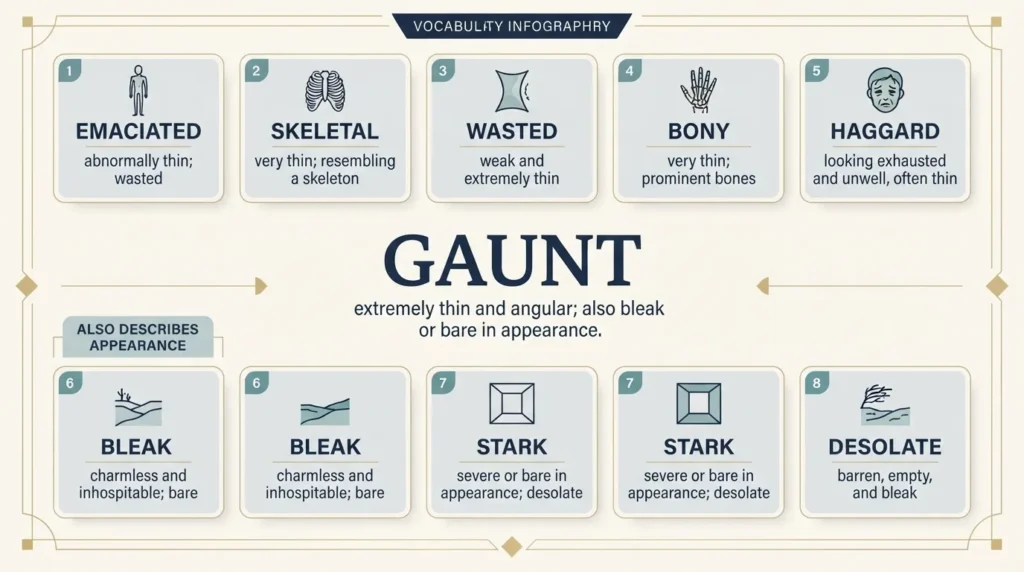
Because gaunt has more than one meaning the synonyms below are separated by sense. Words describing thin people should not automatically replace gaunt when it describes a bleak building or landscape.
Synonyms for Gaunt Meaning “Extremely Thin”
1. Emaciated
Relationship: Near synonym
Meaning: Extremely thin usually because of illness, starvation or another serious condition.
Difference: Emaciated is stronger and more clinical than gaunt.
Best Used For: Serious descriptions of medical contexts journalism or formal writing.
Example: The rescued animal appeared emaciated and weak.
2. Skeletal
Relationship: Near synonym
Meaning: Extremely thin with bones appearing especially noticeable.
Difference: Skeletal creates a stronger visual image of visible bone structure.
Best Used For: Strong visual description and creative writing.
Example: The fictional prisoner was described as skeletal after months of hardship.
3. Wasted
Relationship: Near synonym
Meaning: Made thin and weak by illness, lack of food or physical decline.
Difference: Wasted emphasizes a loss of strength as well as weight.
Best Used For: Literary or serious descriptions of illness and hardship.
Example: The illness had left the character wasted and exhausted.
4. Bony
Relationship: Near synonym
Meaning: Having bones that are very noticeable.
Difference: Bony describes physical structure without necessarily explaining why the person looks that way.
Best Used For: Straightforward physical descriptions.
Example: The artist gave the fictional figure long bony hands.
5. Haggard
Relationship: Near synonym
Meaning: Looking exhausted, worried or worn down.
Difference: Haggard focuses more on tiredness and stress than on extreme thinness.
Best Used For: Faces and appearances affected by worry or exhaustion.
Example: After staying awake all night he looked haggard.
6. Scrawny
Relationship: Contextual alternative
Meaning: Noticeably thin and lacking physical bulk.
Difference: Scrawny is informal and can sound insulting while gaunt is more serious and descriptive.
Best Used For: Informal speech or character dialogue.
Example: The novel describes him as a scrawny young man.
7. Thin
Relationship: Contextual alternative
Meaning: Having relatively little flesh or body fat.
Difference: Thin is much broader and more neutral. It does not imply illness or suffering.
Best Used For: General neutral description.
Example: The actor played a thin, older character.
8. Undernourished
Relationship: Contextual alternative
Meaning: Not receiving enough nutrients or food for proper health.
Difference: It describes nutritional conditions rather than appearance alone.
Best Used For: Health humanitarian scientific or formal contexts.
Example: The veterinarian cared for several undernourished animals.
9. Cadaverous
Relationship: Near synonym
Meaning: Extremely thin and pale in a way that resembles a corpse.
Difference: Cadaverous is much stronger, darker and more literary than gaunt.
Best Used For: Gothic fiction dramatic description or literary writing.
Example: The mysterious character had a cadaverous face.
10. Drawn
Relationship: Near synonym
Meaning: Looking thin, tired or tense especially in the face.
Difference: Drawn often suggests stress worry or lack of rest more than overall thinness.
Best Used For: Describing facial appearance.
Example: She looked drawn after several difficult days.
11. Pinched
Relationship: Contextual alternative
Meaning: Looking narrow, pale or strained in the face.
Difference: Pinched usually applies to facial features rather than the whole body.
Best Used For: Descriptions of illness, cold worry or hardship.
Example: His face looked pale and pinched in the winter air.
12. Hollow-Cheeked
Relationship: Near synonym
Meaning: Having cheeks that appear sunken inward.
Difference: It describes one specific feature commonly associated with a gaunt face.
Best Used For: Detailed visual descriptions.
Example: The illustrator drew a hollow-cheeked traveler.
13. Rawboned
Relationship: Contextual alternative
Meaning: Having a lean angular build with noticeable bones.
Difference: Rawboned can describe someone’s natural build and does not necessarily suggest illness.
Best Used For: Physical descriptions in fiction or narrative writing.
Example: The rawboned rancher towered over the gate.
14. Spare
Relationship: Contextual alternative
Meaning: Lean and lightly built.
Difference: Spare is usually less negative than gaunt and can sound controlled or elegant.
Best Used For: Literary and formal descriptions.
Example: He was a tall man with a spare frame.
15. Lean
Relationship: Contextual alternative
Meaning: Thin with little extra flesh.
Difference: Lean often sounds healthy or neutral while gaunt usually suggests excessive thinness or hardship.
Best Used For: Neutral physical descriptions when no negative implication is intended.
Example: The runner had a lean build.
16. Skinny
Relationship: Contextual alternative
Meaning: Very thin.
Difference: Skinny is informal and can sound judgmental. It does not automatically suggest suffering.
Best Used For: Casual conversation when the tone is appropriate.
Example: The fictional cartoon character had skinny arms and long legs.
17. Lank
Relationship: Contextual alternative
Meaning: Long, narrow and thin.
Difference: Lank often refers to a naturally long and thin shape rather than severe weight loss.
Best Used For: Literary physical descriptions.
Example: A lank figure appeared at the doorway.
18. Shrunken
Relationship: Contextual alternative
Meaning: Reduced in size or appearing smaller and thinner than before.
Difference: Shrunken emphasizes change from an earlier fuller condition.
Best Used For: Describing the effects of age, illness or physical decline.
Example: The story describes the old man’s shrunken frame.
Synonyms for Gaunt Meaning “Bare or Bleak”
These alternatives belong to the second sense of gaunt and should not normally be used for a person’s thin appearance.
19. Bleak
Relationship: Near synonym
Meaning: Cold, empty, unattractive or without hope or warmth.
Difference: Bleak emphasizes mood as much as appearance.
Best Used For: Landscapes buildings weather and settings.
Example: A bleak landscape stretched beyond the window.
20. Desolate
Relationship: Near synonym
Meaning: Empty, lonely and lacking life or comfort.
Difference: Desolate emphasizes abandonment and emptiness.
Best Used For: Landscapes ruin towns and isolated places.
Example: The travelers crossed a desolate plain.
21. Barren
Relationship: Near synonym
Meaning: Bare and lacking plants life or useful features.
Difference: Barren often describes land rather than buildings.
Best Used For: Landscapes and natural environments.
Example: They walked across the barren hillside.
22. Stark
Relationship: Near synonym
Meaning: Plain severe and lacking decoration or softness.
Difference: Stark strongly emphasizes contrast simplicity or severity.
Best Used For: Architecture rooms, landscapes and visual design.
Example: The building’s stark walls rose above the road.
23. Bare
Relationship: Contextual alternative
Meaning: Empty or lacking covering and decoration.
Difference: Bare is simpler and more neutral than gaunt.
Best Used For: Rooms, walls, landscapes and buildings.
Example: The room had bare walls and wooden floors.
24. Austere
Relationship: Contextual alternative
Meaning: Plain severe and without unnecessary decoration.
Difference: Austere can sound deliberate or elegant while gaunt often sounds unattractive or forbidding.
Best Used For: Architecture interiors design and formal writing.
Example: The hall had an austere stone interior.
25. Forbidding
Relationship: Contextual alternative
Meaning: Unfriendly, threatening or unwelcoming in appearance.
Difference: Forbidding focuses on the reaction a place creates rather than its bareness.
Best Used For: Buildings, mountains, castles or isolated places.
Example: The fortress looked dark and forbidding.
26. Grim
Relationship: Contextual alternative
Meaning: Harsh, gloomy and unpleasant.
Difference: Grim emphasizes mood and seriousness more than physical emptiness.
Best Used For: Dark settings and creative description.
Example: The grim tower stood against the cloudy sky.
27. Severe
Relationship: Contextual alternative
Meaning: Plain, strict or harsh in appearance.
Difference: Severe can describe controlled simplicity without the emptiness suggested by gaunt.
Best Used For: Architecture clothing expressions and formal descriptions.
Example: The building had a severe stone front.
28. Unadorned
Relationship: Contextual alternative
Meaning: Having no extra decoration.
Difference: Unadorned is neutral and factual while gaunt adds a bleak or unattractive feeling.
Best Used For: Architecture interiors objects and formal descriptions.
Example: The chapel’s unadorned walls gave it a simple appearance.
Synonyms for Gaunt by Context
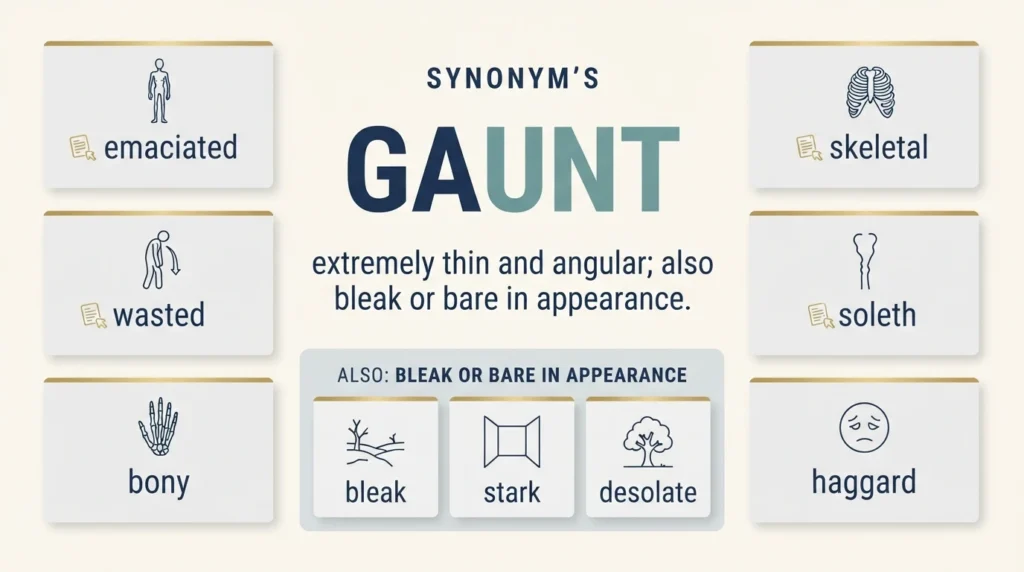
Everyday Conversation
For ordinary conversation thin skinny bony and drawn are easier and more common alternatives. However skinny can sound personal or critical so thin is usually the safer neutral choice.
Formal and Professional Writing
Emaciated, undernourished, drawn and wasted may work when their precise meanings fit. In health-related writing it is usually better to use an objective term that describes the actual condition rather than relying on appearance alone.
Academic Writing
In academic or research contexts broad appearance words such as gaunt may be too subjective. Undernourished underweight or a specific measured description may be more appropriate when factual precision matters.
Creative Writing
Creative writers have the widest range of choices. Gaunt skeletal cadaverous hollow-cheeked haggards bleak stark and forbidding can create strong visual or emotional effects.
Exact vs. Similar Synonyms for Gaunt
No synonym matches gaunt perfectly in every sentence. Emaciation comes close when severe thinness results from illness or lack of food but it is stronger and more clinical. Skeletal emphasizes visible bones while haggard emphasizes exhaustion and stress. Thin is much more neutral and does not carry the same suggestion of hardship.
Context also changes the meaning. A gaunt face may be drawn or hollow-cheeked while a gaunt building may be starkly bleak or forbidding. Choosing the best synonym therefore requires matching both the literal meaning and the emotional tone of the sentence.
Gaunt Antonyms
The following gaunt antonyms mainly apply to the physical-appearance sense.
| Antonym | Meaning | Example Sentence |
| Plump | Having a fuller rounded shape | The artist painted the character with plump cheeks. |
| Fleshy | Having a noticeable amount of soft flesh | The plant had thick fleshy leaves. |
| Full-faced | Having a relatively full or rounded face | The portrait showed a full-faced young man. |
| Rounded | Having a fuller curved shape | The character was drawn with rounded features. |
| Well-fed | Having received enough food | The farm animals looked well-fed and active. |
| Well-nourished | Receiving enough nutrients for health | The veterinarian described the puppy as well-nourished. |
| Robust | Strong and healthy-looking | The fictional explorer appeared robust and energetic. |
| Stocky | Broad and solidly built | The story describes the guard as short and stocky. |
Is Plump an Antonym for Gaunt?
Yes. Plump can be an antonym for gaunt when the words describe physical appearance. Gaunt suggests an unusually thin or angular appearance while plump describes a fuller, more rounded shape. They are not opposites in every possible context because gaunt also has a separate meaning for bleak buildings or landscapes.
Common Collocations With Gaunt
| Phrase | Meaning | Example Sentence |
| Gaunt face | A very thin angular-looking face | The character’s gaunt face showed signs of hardship. |
| Gaunt features | Thin sharp facial features | His gaunt features made him look older in the portrait. |
| Gaunt cheeks | Hollow or very thin-looking cheeks | The artist emphasized the figure’s gaunt cheeks. |
| Gaunt figure | A very thin-looking person | A gaunt figure appeared in the doorway. |
| Look gaunt | Appear unusually thin or worn | The fictional patient began to look gaunt. |
| Gaunt appearance | An overall thin worn look | Makeup gave the actor a gaunt appearance for the role. |
| Gaunt frame | A very thin angular body shape | The loose coat hung from the character’s gaunt frame. |
| Gaunt ruins | Bare bleak-looking remains of a building | The gaunt ruins stood alone on the hillside. |
Frequently Asked Questions
What is a synonym for the word gaunt?
A close synonym for gaunt is emaciated when describing someone who is extremely thin because of illness, hunger or hardship. Other useful choices include skeletal wasted bony and haggard depending on what caused the appearance and how strong the description should sound.
What does gaunt mean?
Gaunt usually means extremely thin and angular, especially when someone’s appearance suggests illness, hunger, worry or suffering. It can also describe a building or place that looks bare, bleak plain or forbidding.
What is the synonym and antonym of gaunt?
One strong synonym of gaunt is emaciated although emaciated is usually more severe. A possible antonym is plump which describes a fuller rounded appearance. Other synonyms include skeletal and wasted while full-faced and well-nourished can work as contextual opposites.
What does gaunt looking mean?
Gaunt-looking describes someone whose face or body appears unusually thin, angular or hollow. The phrase often suggests that the appearance may be connected with illness, exhaustion, worry hunger or another difficult experience rather than simply describing a naturally thin build.
What does gaunt actually mean?
At its core gaunt means noticeably thin and bony in a way that often suggests hardship. The word can carry a serious or somber tone. In another sense it can describe something such as a building or landscape that looks bleak, bare or severe.
Does gaunt mean skinny?
Gaunt can mean very skinny but the words are not identical. Skinny simply means very thin and is informal. Gaunt is stronger and often suggests visible bones hollow features illness hunger worry or prolonged hardship. It therefore carries more emotional meaning.
Conclusion
Choosing the right synonym for gaunt makes writing clearer and more precise. Emaciated skeletal haggard and thin may describe similar appearances but each carries a different strength and tone.
Always consider whether you are describing ordinary thinness, hardship, facial, exhaustion or a bleak place before choosing the best word.

About Sajjad Ahmed
Sajjad Ahmed is the author behind Guest Paster, where he writes about English vocabulary, synonyms, word meanings, and practical word usage.
His content is designed to help readers understand the differences between similar words, discover suitable alternatives, and use English vocabulary more effectively in everyday writing and communication.
Before publishing, Sajjad focuses on presenting word choices in a clear and easy-to-understand format, with relevant meanings, context, and examples where helpful.
Through Guest Paster, his goal is to make vocabulary learning simpler and provide useful language resources for students, writers, English learners, and anyone looking to expand their vocabulary.
Areas of Focus: English Vocabulary • Synonyms • Word Meanings • Word Usage • Language Learning
Author: Sajjad Ahmed
Website: Guest Paster