
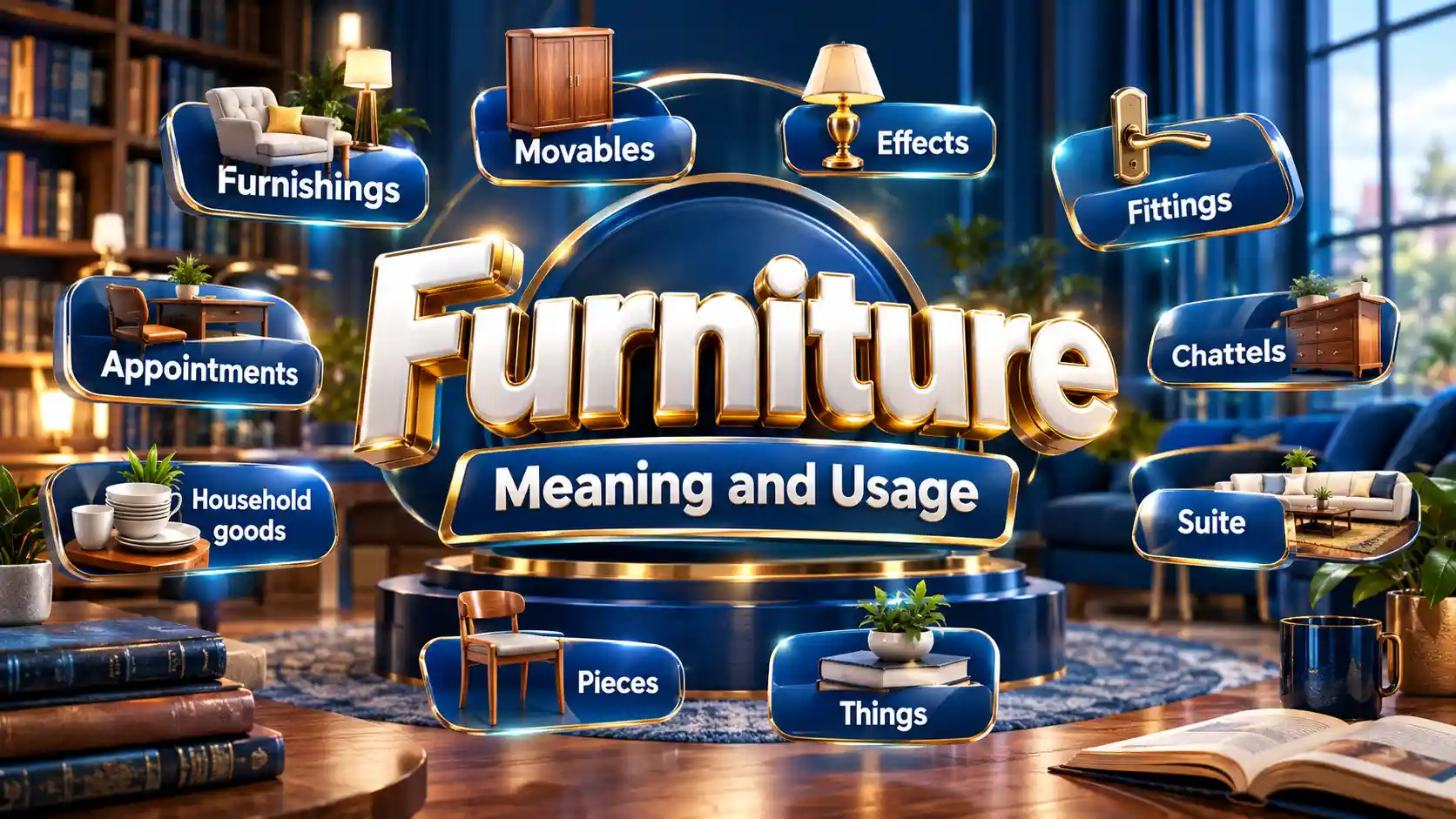
Collectively, movable objects that make a space livable or workable are referred to as furniture. Examples include chairs, tables, beds, sofas and other similar items.
The closest equivalent to ‘furniture’ in everyday language is ‘furnishings’, which not only refers to the solid pieces of furniture but also includes soft furnishings like curtains and rugs. For formal or legal situations, movables or chattels would be a better word to use, as it is used here, referring to personal property which can be moved.
Whether you choose to live in an apartment or a house, the most people will agree that furniture plays a central role in determining how livable a space really feels.
Top 10 at a Glance
| # | Synonym | Meaning Difference | Best Used For | Formality |
| 1 | Furnishings | Extends to soft goods and décor | Home staging, real estate | Neutral |
| 2 | Movables | Legal emphasis on portability | Legal documents, wills | Formal |
| 3 | Effects | Personal belongings, not room setup | Insurance, moving lists | Formal |
| 4 | Fittings | Fixed or semi-fixed items | Real estate, built-in units | Neutral |
| 5 | Appointments | Complete set of room equipment | Historical, luxury contexts | Formal/Archaic |
| 6 | Household goods | Broader category including appliances | Moving, storage, inventory | Neutral |
| 7 | Chattels | Legal term for personal property | Law, estate planning | Formal |
| 8 | Suite | Matching set of furniture | Hotel, bedroom sets | Neutral |
| 9 | Pieces | Individual items, not collective | Shopping, inventory | Informal |
| 10 | Things | Vague catch-all, context-dependent | Casual conversation | Informal |
Quick Facts About Furniture
- Part of speech: Noun (uncountable/collective)
- Simple meaning: Movable objects used to make a room functional
- Pronunciation: /ˈfɜːrnɪtʃər/ (UK: FUR-ni-chuh; US: FUR-ni-cher)
- Syllables: 3 (fur-ni-ture)
- Word forms: Furniture (noun), furnish (verb), furnished (adjective), furnishings (noun)
- Formality: Neutral
- Closest synonym: Furnishings
- Best used for: Describing the movable contents of a home, office, or other space
What Is the Closest Synonym for Furniture?
Furnishings is the closest true synonym for furniture in everyday English. Both words refer to the movable items that make a room usable — tables, chairs, beds, sofas, desks, and storage pieces.
The key difference is scope: furnishings often stretches to cover decorative or soft items that aren’t strictly furniture, such as rugs, drapery, cushions, and lamps.
When a real estate listing says “comes fully furnished,” it typically means the space includes both the furniture and the key furnishings around it. If you want to describe the complete livable setup rather than just the hard pieces, furnishings is your word.
Word Origin & Etymology
The word “furniture” entered English in the 1520s from the Middle French fourniture, meaning “a supplying or providing.”
It shares a root with the verb furnish, which meant “to supply or equip” (from Old French fournir). Originally, furniture referred broadly to equipment or provisions of any kind — not just tables and chairs. By the late 16th century, the meaning had narrowed to the movable articles that equip a room for living.
The word has always carried a sense of “that which completes or makes ready” a space.
Can These Synonyms Be Used Interchangeably?
Rarely. Furniture and furnishings are nearly interchangeable in casual speech, but most other alternatives carry specific legal, regional, or archaic connotations that limit their use. Movables and chattels belong in legal documents, not dinner-table conversation. Appointments sounds dated or affected in modern English.
Effects usually refers to personal belongings one carries, not the permanent contents of a room. Fittings technically refers to fixed or semi-fixed installations, which contrasts with furniture’s defining trait of being movable.
Only furnishings can substitute for furniture across most everyday contexts without sounding strange.
Detailed Synonym Meanings and Examples

1. Furnishings
Meaning: The movable articles and decorative items that equip a room for living.
Difference from furniture: Broader scope; frequently pulls in soft goods and decorative touches alongside tables and chairs.
Best Used For: Real estate listings, interior design, home staging.
Formality: Neutral
CEFR Level: B1
Frequency: Very Common
Examples:
- Real estate: “The apartment comes with all furnishings, including the sofa and dining set.”
- Interior design: “She chose neutral furnishings to let the artwork stand out.”
When NOT to Use It: Avoid when you need to exclude decorative items and refer only to hard pieces like tables and beds.
2. Movables
Meaning: Tangible personal property that can be moved, including furniture.
Difference from furniture: Legal term emphasizing portability as a category; includes items beyond furniture (vehicles, equipment).
Best Used For: Legal contracts, wills, estate inventories.
Formality: Formal
CEFR Level: C1
Frequency: Uncommon
Examples:
- Legal: “The lease specifies that all movables remain the property of the tenant.”
- Estate planning: “The will divided the movables equally among the heirs.”
When NOT to Use It: Never use in casual conversation about home décor; it sounds like a court document.
3. Effects
Meaning: Personal belongings or possessions, often those carried or worn.
Difference from furniture: Usually refers to personal items (clothing, jewelry, documents) rather than room equipment; can include furniture in legal phrases like “household effects.”
Best Used For: Insurance claims, moving inventories, personal property lists.
Formality: Formal
CEFR Level: B2
Frequency: Common
Examples:
- Insurance: “Please list all household effects for the moving policy.”
- Legal: “The defendant’s personal effects were returned after the trial.”
When NOT to Use It: Avoid when referring specifically to sofas, tables, and beds — use furniture or furnishings instead.
4. Fittings
Meaning: Items installed or attached in a building, often semi-permanent — also called “house fittings” in British usage.
Difference from furniture: Typically refers to fixed or built-in items (shelves, cupboards, light fixtures) rather than movable pieces.
Best Used For: UK real estate, rental agreements, built-in storage.
Formality: Neutral
CEFR Level: B2
Frequency: Common
Examples:
- Real estate: “The property includes all fixtures and fittings except the chandelier.”
- Rental: “Tenants are responsible for furniture, but fittings are maintained by the landlord.”
When NOT to Use It: Do not use for freestanding tables, chairs, or beds — those are furniture, not fittings.
5. Appointments
Meaning: The complete equipment or furnishings of a place, especially in a formal or historical sense.
Difference from furniture: Broader and more formal; implies the entire outfitting of a space, often with an air of luxury or ceremony.
Best Used For: Historical writing, luxury real estate, formal descriptions.
Formality: Formal/Archaic
CEFR Level: C2
Frequency: Rare
Examples:
- Historical: “The manor’s appointments included tapestries, oak tables, and silver candlesticks.”
- Luxury: “The yacht’s elegant appointments matched its price tag.”
When NOT to Use It: Modern speech almost never uses this term for everyday furniture; it sounds pretentious.
6. Household Goods
Meaning: A broad category of movable items used in a home, including furniture, appliances, and utensils.
Difference from furniture: Much broader; encompasses everything from toasters to sofas.
Best Used For: Moving companies, storage, inventory, insurance.
Formality: Neutral
CEFR Level: B1
Frequency: Common
Examples:
- Moving: “The van can carry up to three rooms of household goods.”
- Storage: “We packed the household goods first and left the furniture for the movers.”
When NOT to Use It: Avoid if you mean only sofas, tables, and beds — it includes far more than furniture.
7. Chattels
Meaning: Legal term for tangible personal property, including furniture.
Difference from furniture: Legal category covering all movable property, from livestock to jewelry to tables.
Best Used For: Law, estate planning, property disputes.
Formality: Formal
CEFR Level: C1
Frequency: Uncommon
Examples:
- Legal: “The divorce settlement divided the chattels, including the dining set.”
- Estate: “Chattels are distinguished from real property in the deed.”
When NOT to Use It: Never in everyday speech; it belongs in contracts and courtrooms.
8. Suite
Meaning: A matching set of furniture designed for one room or purpose.
Difference from furniture: Refers specifically to a coordinated group (bedroom suite, dining suite), not the category as a whole.
Best Used For: Hotel descriptions, furniture retail, bedroom sets.
Formality: Neutral
CEFR Level: B1
Frequency: Common
Examples:
- Retail: “The bedroom suite includes a bed, two nightstands, and a dresser.”
- Hotel: “Each room features a custom furniture suite.”
When NOT to Use It: Avoid when referring to furniture in general; it implies a matched set, not the category.
9. Pieces
Meaning: Individual items of furniture, viewed separately rather than collectively.
Difference from furniture: Focuses on discrete units (“a piece of furniture”) rather than the collective noun.
Best Used For: Shopping, inventory, moving estimates.
Formality: Informal
CEFR Level: A2
Frequency: Very Common
Examples:
- Shopping: “We bought three pieces for the living room.”
- Moving: “The movers charged by the piece, not the hour.”
When NOT to Use It: Do not use as a direct synonym in formal writing; it requires context (“pieces of furniture”).
10. Things
Meaning: General term for possessions or objects, including furniture in context.
Difference from furniture: Extremely vague; only means furniture when context makes it clear.
Best Used For: Casual speech, vague references.
Formality: Informal
CEFR Level: A2
Frequency: Very Common
Examples:
- Casual: “Help me move these things into the other room.”
- Vague: “We need to buy things for the new apartment.”
When NOT to Use It: Never in professional or academic writing where precision matters.
11. Stuff
Meaning: Informal term for miscellaneous items, including furniture in casual context.
Difference from furniture: Even vaguer than “things”; purely colloquial.
Best Used For: Very casual conversation.
Formality: Informal
CEFR Level: A2
Frequency: Very Common
Examples:
- Casual: “Where should I put this stuff?”
- Moving: “We’ve got too much stuff for this apartment.”
When NOT to Use It: Never in any formal or written context.
12. Kit
Meaning: A set of equipment or parts, occasionally used for furniture in specific contexts.
Difference from furniture: Usually refers to components or a matched set, not the general category.
Best Used For: DIY furniture, flat-pack descriptions.
Formality: Neutral
CEFR Level: B1
Frequency: Common
Examples:
- DIY: “The desk came as a flat-pack kit.”
- Retail: “Assembly required — the kit includes all hardware.”
When NOT to Use It: Not a general synonym; only applies to unassembled or component-based furniture.
13. Interior
Meaning: The inside of a space, sometimes used metonymically for its furniture and décor.
Difference from furniture: Refers to the space itself, not the objects; used loosely in design contexts.
Best Used For: Interior design, architecture, real estate.
Formality: Neutral
CEFR Level: B2
Frequency: Common
Examples:
- Design: “The interior features mid-century modern furniture.”
- Real estate: “The interior needs updating, especially the furniture.”
When NOT to Use It: Avoid when you mean the objects specifically; “interior” is the space, not the furniture.
14. Movable Property
Meaning: Legal term for property that can be moved, including furniture.
Difference from furniture: Broader legal category; includes vehicles, equipment, and valuables.
Best Used For: Legal documents, tax filings.
Formality: Formal
CEFR Level: C1
Frequency: Uncommon
Examples:
- Legal: “Movable property is assessed separately from real estate.”
- Tax: “Declare all movable property used for business.”
When NOT to Use It: Avoid in casual writing; it sounds bureaucratic.
15. Personal Chattel
Meaning: An individual item of movable personal property.
Difference from furniture: Singular unit in legal terms; furniture is the collective noun.
Best Used For: Wills, estate inventories.
Formality: Formal
CEFR Level: C1
Frequency: Rare
Examples:
- Legal: “Each personal chattel was listed in the probate inventory.”
- Estate: “The watch was her most treasured personal chattel.”
When NOT to Use It: Never in everyday speech about sofas and chairs.
16. Gear
Meaning: Equipment or belongings, sometimes used informally for furniture.
Difference from furniture: Broader and informal; can mean tools, clothing, or equipment.
Best Used For: Casual speech, moving contexts.
Formality: Informal
CEFR Level: B1
Frequency: Common
Examples:
- Casual: “We loaded all our gear into the truck.”
- Moving: “The camping gear goes in the trunk, the furniture in the van.”
When NOT to Use It: Avoid in formal writing; it lacks precision and sounds slangy.
17. Trappings
Meaning: The visible items associated with a particular style or status, often including furniture.
Difference from furniture: Emphasizes appearance and symbolism over function; usually plural and figurative.
Best Used For: Literary or descriptive writing about wealth, status, or period settings.
Formality: Formal/Literary
CEFR Level: C1
Frequency: Uncommon
Examples:
- Literary: “The drawing room had all the trappings of old money — heavy drapes, dark wood furniture, and gilt mirrors.”
- Descriptive: “She’d stripped the office of its executive trappings, keeping only a plain desk.”
When NOT to Use It: Avoid as a plain, neutral synonym — it carries a judgmental or symbolic undertone that “furniture” doesn’t have.
Best Alternatives by Context
- Everyday Conversation: Furnishings, pieces, stuff (informal), things
- Formal Writing: Furnishings, movables, household effects
- Academic Writing: Movables, chattels, household goods (in historical or economic contexts)
- Business Communication: Furnishings, fittings, suite
- Creative Writing: Appointments (for historical flavor), trappings, pieces
- Social Media: Pieces, finds, décor (if referring to aesthetic furniture)
Which Synonym Should I Choose?
| Situation | Best Choice | Why |
| Real estate listing | Furnishings | Includes soft goods and décor, sounds appealing |
| Legal contract | Movables or chattels | Precise legal category for personal property |
| Casual conversation | Pieces or stuff | Natural, relaxed tone |
| Interior design | Furnishings | Broader scope covers all room elements |
| Moving inventory | Household goods | Standard term in the moving industry |
| Historical writing | Appointments | Captures period flavor |
Exact and Near Synonyms: Difference
True synonyms — words that can replace each other in every context without any change in meaning — are extremely rare. Furniture and furnishings come closest, but even they differ in scope.
Most alternatives are near synonyms that share a core meaning but differ in register, legal precision, or regional usage. “Movables” and “furniture” overlap in referring to portable property, but “movables” belongs to legal language and includes far more than tables and chairs.
Choosing the wrong near synonym can make your writing sound overly technical, archaic, or imprecise.
Words Commonly Confused with Furniture

These words relate to furniture but are not true synonyms — they either name a different category, a specific type, a person, an action, or a related concept, and none of them can substitute for “furniture” in a sentence without changing the meaning.
- Fixtures: Items attached to a property; legally the opposite of furniture, which is defined by being movable.
- Built-ins: Fixed cabinetry or shelving attached to a structure; also the opposite of movable furniture.
- Furniture Maker (Cabinetmaker): A person who builds furniture — names the craftsperson, not the objects.
- Furnish: The verb form, meaning to supply a space with furniture — an action, not the objects themselves.
- Stationery: Office supplies like paper and pens, not furniture.
- Appliances: Electrical machines like refrigerators and ovens; not furniture.
- Décor: Decorative items like vases and artwork; not functional furniture.
- Bedding: Linens and covers for a bed; not the bed frame itself.
Common Mistakes
| Mistake | Better | Why |
| “A furniture” | “A piece of furniture” | Furniture is uncountable; never use “a” directly before it |
| “Furnitures” | “Furniture” or “pieces of furniture” | No plural form; it is a collective noun |
| Calling fixtures “furniture” | Use “fixtures” or “fittings” | Fixtures are attached; furniture is movable |
| Using “furniture” for appliances | Use “appliance” or “household goods” | Refrigerators and ovens are not furniture |
Antonyms of Furniture
Furniture has no exact antonym, but several concepts oppose its meaning:
- Empty space: The absence of furniture; a bare area
- Bare floor: A space with no furnishings
- Void: Complete emptiness, the conceptual opposite of a furnished room
- Bare room: An unfurnished space
American vs British English
Spelling: No difference; both use “furniture.”
Vocabulary: British English often uses “fittings” where American English would say “fixtures” or “built-ins.” In British English, “lounge” usually names the room (the sitting room), not a piece of furniture — the individual sofa is more often called a “settee,” especially in older or more formal UK usage.
Regional preference: In Canada, “chesterfield” is commonly used for a large sofa, while Americans almost always say “couch” or “sofa.”
Real-World Collocations & Phrases
Common Combinations
- Verb + Furniture: buy furniture, move furniture, arrange furniture, furnish (a room)
- Furniture + Noun: furniture store, furniture maker, furniture polish, furniture design
- Adjective + Furniture: modern furniture, antique furniture, wooden furniture, office furniture
- Furniture + Preposition: furniture for (a room), furniture in (a house)
Idioms and Set Phrases
- “Part of the furniture”: Someone or something so familiar they seem permanent
- “A piece of furniture”: A single item of furniture
FAQ
1. What is the closest synonym for furniture?
Furnishings is the closest everyday synonym, though it often includes decorative items like rugs and curtains.
2. Can I use “furniture” and “furnishings” interchangeably?
In most casual contexts, yes, but furnishings is broader and includes soft goods that aren’t strictly furniture.
3. What does “furniture” mean exactly?
Furniture refers to movable objects — tables, chairs, beds, sofas — that make a room suitable for living or working.
4. Is “furniture” formal or informal?
Neutral; it works in all registers from casual conversation to academic writing.
5. How do I use “furniture” in a sentence?
“The apartment came with all the furniture included.” Remember it is uncountable: say “a piece of furniture,” never “a furniture.”
6. What is the opposite of furniture?
There is no exact antonym, but “empty space,” “bare room,” or “void” express the absence of furniture.
Practice Exercises
Fill in the Blanks
- We need to buy new __________ for the living room.
- The house comes fully __________, including curtains and rugs.
- The __________ in the lease specifies that all movable property belongs to the tenant.
- Please list all personal __________ for the insurance claim.
- The dining __________ includes a table and six chairs.
Rewrite the Sentences
- “We bought a new furniture yesterday.” (Correct the error)
- “The fixtures and the furniture are both movable.” (Make accurate)
- “The couch is a furniture.” (Rewrite correctly)
Match the Words
Match each term to its best definition:
- A. Movables → 1. A matching set of furniture
- B. Fittings → 2. Legal term for personal property
- C. Suite → 3. Installed or semi-fixed items
- D. Chattels → 4. Movable personal property in legal terms
Vocabulary Quiz (MCQ)
- Which word means “movable personal property” in legal terms?
a) Furnishings b) Movables c) Fittings d) Suite - Which term includes curtains and rugs alongside tables and chairs?
a) Furniture b) Furnishings c) Fittings d) Chattels - What is the correct phrasing?
a) A furniture b) A piece of furniture c) Furnitures d) A furnitures - Which word refers to a matching set of furniture?
a) Movables b) Effects c) Suite d) Gear - Which is an antonym concept for furniture?
a) Décor b) Empty space c) Fixtures d) Appliances
Answer Key
Fill in the Blanks: 1. furniture 2. furnished 3. movables 4. effects 5. suite
Rewrite: 1. “We bought new furniture yesterday.” 2. “Fixtures are fixed; furniture is movable.” 3. “The couch is a piece of furniture.”
Match: A-4, B-3, C-1, D-2
Quiz: 1-b, 2-b, 3-b, 4-c, 5-b
Conclusion
Choosing the right synonym for furniture depends entirely on context, not on finding a universal replacement. Furnishings works for almost any everyday situation involving home or office interiors. Movables and chattels belong in legal documents. Pieces and stuff suit casual conversation.
When you match the word to the situation, your meaning lands clearly and your writing sounds natural rather than forced.

About Sajjad Ahmed
Sajjad Ahmed is the author behind Guest Paster, where he writes about English vocabulary, synonyms, word meanings, and practical word usage.
His content is designed to help readers understand the differences between similar words, discover suitable alternatives, and use English vocabulary more effectively in everyday writing and communication.
Before publishing, Sajjad focuses on presenting word choices in a clear and easy-to-understand format, with relevant meanings, context, and examples where helpful.
Through Guest Paster, his goal is to make vocabulary learning simpler and provide useful language resources for students, writers, English learners, and anyone looking to expand their vocabulary.
Areas of Focus: English Vocabulary • Synonyms • Word Meanings • Word Usage • Language Learning
Author: Sajjad Ahmed
Website: Guest Paster